
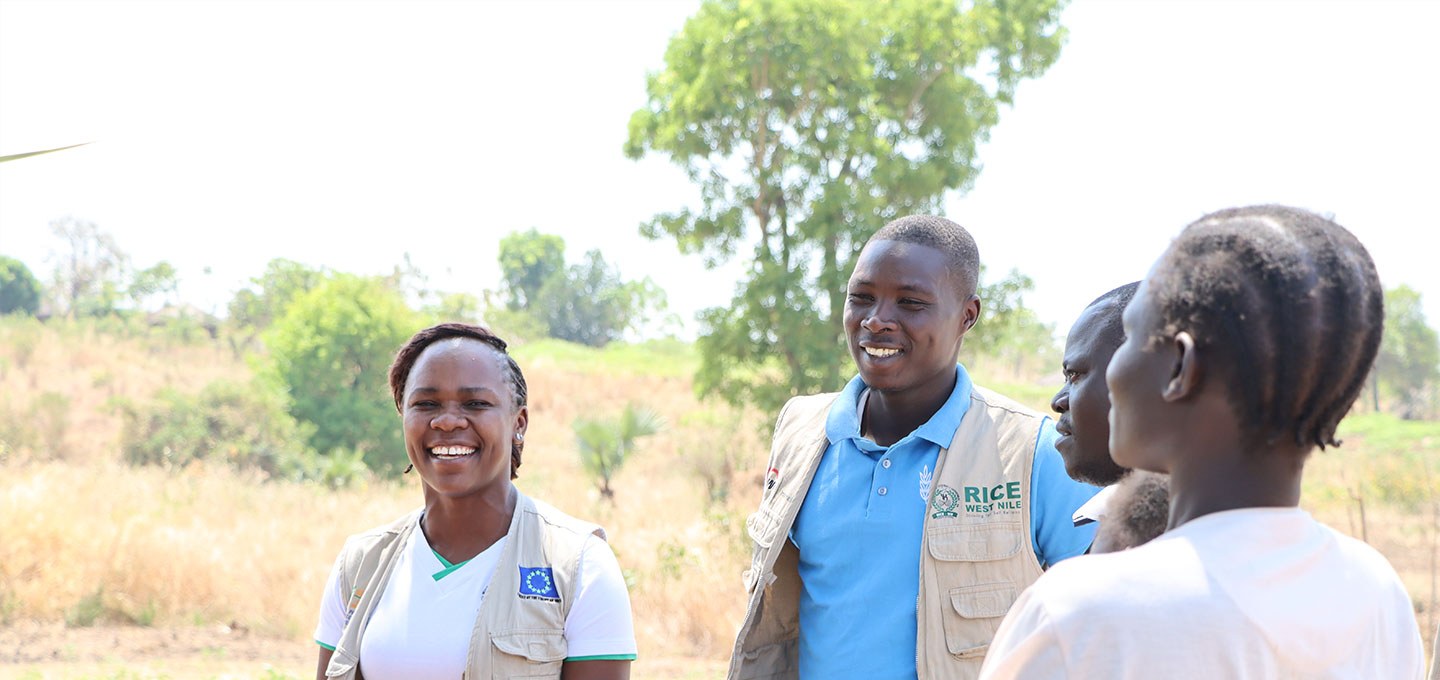
How RICE West Nile helped Bidibidi communities build resilience
For the past four years, CHASE Africa and RICE West Nile have worked with displaced and host communities in and around the Bidibidi Refugee Settlement in Uganda.
Most people in the Bidibidi Refugee Settlement have fled civil war in South Sudan, seeking shelter and protection. Yet the settlement faces a difficult mix of pressures that negatively impact the quality of life of its inhabitants.
Heavy reliance on wood fuel has driven environmental degradation, competition over natural resources has created tension between host and displaced communities. Poor harvests exacerbated by climate change have pushed the district into food crisis. Limited access to health services has left many women without the information or means to plan their families, resulting in a high number of unintended pregnancies in the area. With reduced international funding in the settlement, the situation has worsened.
To tackle these challenges, the project worked across four complementary areas:
- building local capacity
- improving food security
- easing environmental pressure and restoring degraded land
- bringing health services closer to home
The project established, trained and equipped self-help groups and Parish Environmental Champions to strengthen local capacity needed to sustain change beyond the life of the project.
Self-help groups were supported to establish kitchen gardens, form saving groups, create small social enterprises such as poultry rearing, and build fuel-efficient cookstoves. These groups also received information and access to health services, including family planning.
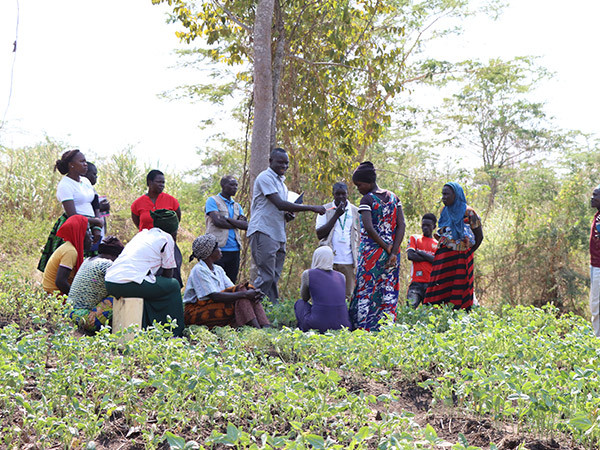
A women's savings group
The training has changed my life. My kitchen garden gives my family healthy food and I earn income by selling extra vegetables. I now know how to budget and save money, and my Lorena stove uses less firewood and makes cooking easier. I am happy to help other families learn these skills and improve their lives.
Regina
Demonstration plots for small scale farming and kitchen gardens addressed food insecurity and environmental degradation together, easing pressure on natural resources while improving household food supply. Communities have begun to restore soil health, increase vegetation cover and improve the overall resilience of local ecosystems.
Backpack Nurse clinics carried reproductive, maternal and child health services, including family planning, directly to households who were too far from the nearest facility to reach it otherwise.
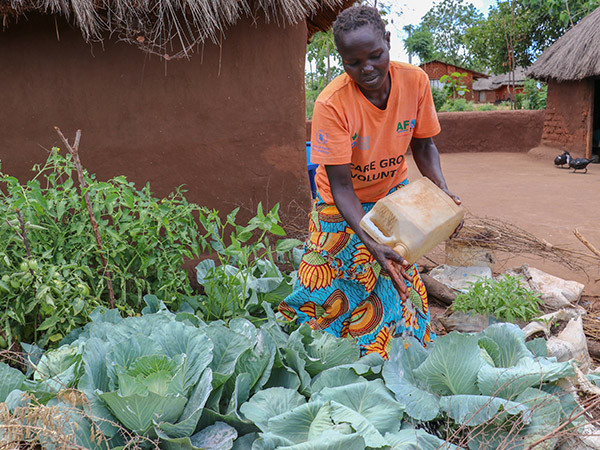
Regina (photo) is a refugee and member of a saving group supported by RICE West Nile's Integrated Sustainable Livelihood and Environmental Programme. Regina received training in kitchen gardening, financial literacy and the construction of Lorena fuel-efficient stoves using locally available materials. Because of her commitment and active participation Regina was selected as a Parish Environmental Champion.
Social cohesion was supported through bringing together displaced and host community members in some of the self-help groups and through joint training and activities. In addition, RICE West Nile organised learning visits across the groups to address common challenges and skill sharing.
Four years of funding contributed to lasting impact. 40,576 people were reached across the project area. The proportion of households able to feed themselves year-round without outside help rose from 48% to 85%. And the proportion of women able to name at least three modern family planning methods rose from 26% to 75%.
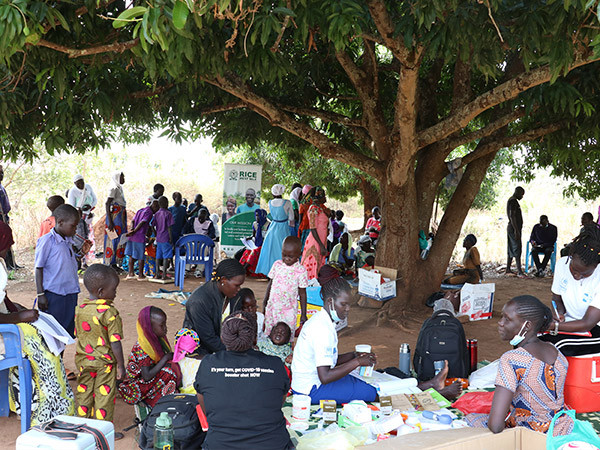
An outreach clinic
244 Lorena cookstoves were constructed, reducing the demand for firewood and charcoal and women and children spent significantly less time collecting firewood or purchasing charcoal.
78% of respondents reported living in harmony with members of the other community, indicating good trust and improved peaceful coexistence between refugee and host populations.
Despite reduced international donor assistance, as a result of significant aid cuts in the past 18 months, both host and displaced communities in the area report feeling more able to sustain themselves without relying on outside help.
We are grateful to our donor JAC Trust and our partners RICE West Nile for successfully implementing this project.
To watch a short video about this project please head to our YouTube channel.
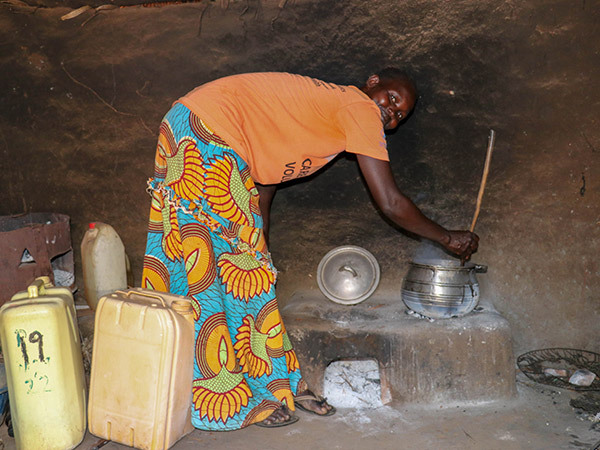
Regina using her Lorena cookstove